
I just got finished (well, finished is never the right word for a website – started?) with my second website in as many months. In the last 6 months there’s been AndyTube which I started at the end of 2024, and the UNF Fediverse site I built in February.
With the addition of a day job, I’ve been a busy boy.
So what? Big deal.
Lack of blogging can be a sign of withdrawing, or it can be a “I had too much to blog last night” feeling. Drunk on blog ideas. OK, it has only been a little over a month since my last post, but I’ve been generally on a roll. It’s time to unblock.
So let’s get the party started.
I’ve been working on several personal projects (myself included). However, let me give you the view from 30,000 feet. I may joke about building the Andy Rush empire, but with the number of web presences of mine that I’ve touched lately, I feel like I’m starting to lose control of my fiefdoms. Anyway, here goes.
Y’all are getting to understand my Fediverse obsession by now. Let’s call it a belief. The idea is that I have all these ways to communicate, create, and share. The problem has always been where to share stuff (the destination) and from where to do it (the origin). The philosophy that I and many of my colleagues & friends share has to do with reclaiming ownership of your digital life. The approaches we all take are varied, and experimental, and personal. The question we ask is “what’s the best way to do that?” The answer always is “it depends.”
What am I sharing? Well, for more than 20 years now I’ve been sharing my thoughts on education and technology (and that intersection), as well as media – photos, video, interactive elements, etc. The birth of it all came in 2004, while working with some fun and creative folks at the University of Mary Washington.
By the way, I know the math works out to 20+ years ago, but there’s no way that can be true.
Back to the party.
The original, “stable” version of my blog – AndHeBlogs is where the history was, and still is, being recorded. Way back when, I experimented with something called the MediaBlog, at the time when digital video on the web was taking off. Remember Flash Video (LOL FLVs)? MediaBlog was my second website in the stable of andyrush.net sites. I also played with MediaWiki, and Drupal, and Coppermine, and phpBB, and you get the idea. It was a lovely sandbox to play in.
However, one tried and true web application that I have stayed with for the duration is WordPress. It now serves as that web security blanket that is oh so comfortable, and I dare say that I have gotten more comfortable taking a spanner to the inner workings of. Shortly after I arrived at the University of North Florida, I began to take a deeper dive into WordPress, in preparation of implementing the Domain of One’s Own project for UNF faculty. I also began to reflect on WordPress and Its Amazing Longevity. One of the problems I ran into not long after launching the Domain of One’s Own initiative at UNF, was learning that faculty wanted websites with, in some cases, advanced capabilities and customization.
While attending a Jacksonville WordCamp, I discovered something called Elementor. This is where things took a dramatic turn where I no longer needed to just accept a given WordPress theme or plugin and live with the sometimes limited design or functionality, but I could customize a whole site. Elementor taught me about the WordPress architecture, which I hadn’t really understood before. I now began to understand what all those PHP files were, and how a given page was built dynamically. It provided me a nice graphical interface for the WordPress functionality.
OK. Next a quick word about something called Gutenberg. Now, some of you just reacted like in the scene in Animal House where John Belushi’s character, Bluto, sees the picture of the new fraternity pledge, Flounder. AHHH!
Stay with me.
Not too long after Elementor was released, the folks at WordPress started to talk about their new editor, Gutenberg. I didn’t blog about it on my personal websites, but I did do a write-up on WordPress 5.0 (at the UNF Domains site). That was December of 2018. The new editor was not very well received, and the fact that the “Classic Editor” plugin is STILL available just shows how long it’s taken to shake the stench of Gutenberg’s development – now known as the “Block Editor.”
Alright, it’s 2025. How do I put this other than to blurt it out. I’m really liking the block editor. More specifically I’m liking what is called Full Site Editing (FSE). It’s all Elementor’s fault. What I mean is that Elementor allowed a simpleton coder like me to create a site that previously I only envisioned in my head. There were/are many things not to like about Elementor, or other so called page builders (Divi, Beaver Builder, Site Origin). There’s also plenty to complain about with WordPress’ FSE.
However, in this project that I’m working on (that I will finally get to I promise), I have grown to appreciate it. Maybe even full-on like is imminent. It has developed slowly over time, with periodic improvements included in WordPress updates since that initial 5.0 release. Yep. 2018 to 2025 is a long time. The progress has been slow. I remember having a conversation with Alan Levine about using Gutenberg and the classic editor in tandem – use what’s best for a particular task in the editing process. That was 2019.
Listen, every site I was building when Gutenberg was released HAD to include the Classic Editor. Otherwise it was extreme pain. However, with these current projects, I’m finding that Classic now gets in the way. Over the next few paragraphs (and dare I say posts?), I’ll begin to try to explain.
Elementor introduced a feature called the Navigator. What it would show you was an overview/hierarchy of the overall design in a page. You could highlight a specific section or component and it would correspondingly show that piece in the page editor with all of its parameters. There is also the Theme Builder feature. This is the place where you can customize WordPress templates (the PHP files) like headers, footers, single-page, post archive, search results page, etc. I love that kind of control, and it’s needed if you want to make your WordPress site what you want.
But the thing I started to worry about was Elementor’s custom code. Not that I think that Elementor is going away anytime soon, but I began to desire having whatever code I was using to be native to WordPress, and also not having the overhead of an additional plugin installed (especially the “Pro” version which of course means $$$). Make no mistake, I think Elementor is good and it can be easier to use, but the progress WordPress has made with FSE has changed the dynamic. If I can do most of what I want to with the Full Site Editor, why not use it? I also won’t have to worry about keeping Elementor up-to-date, and in some cases the updates would break the design.
The following project will be the test.
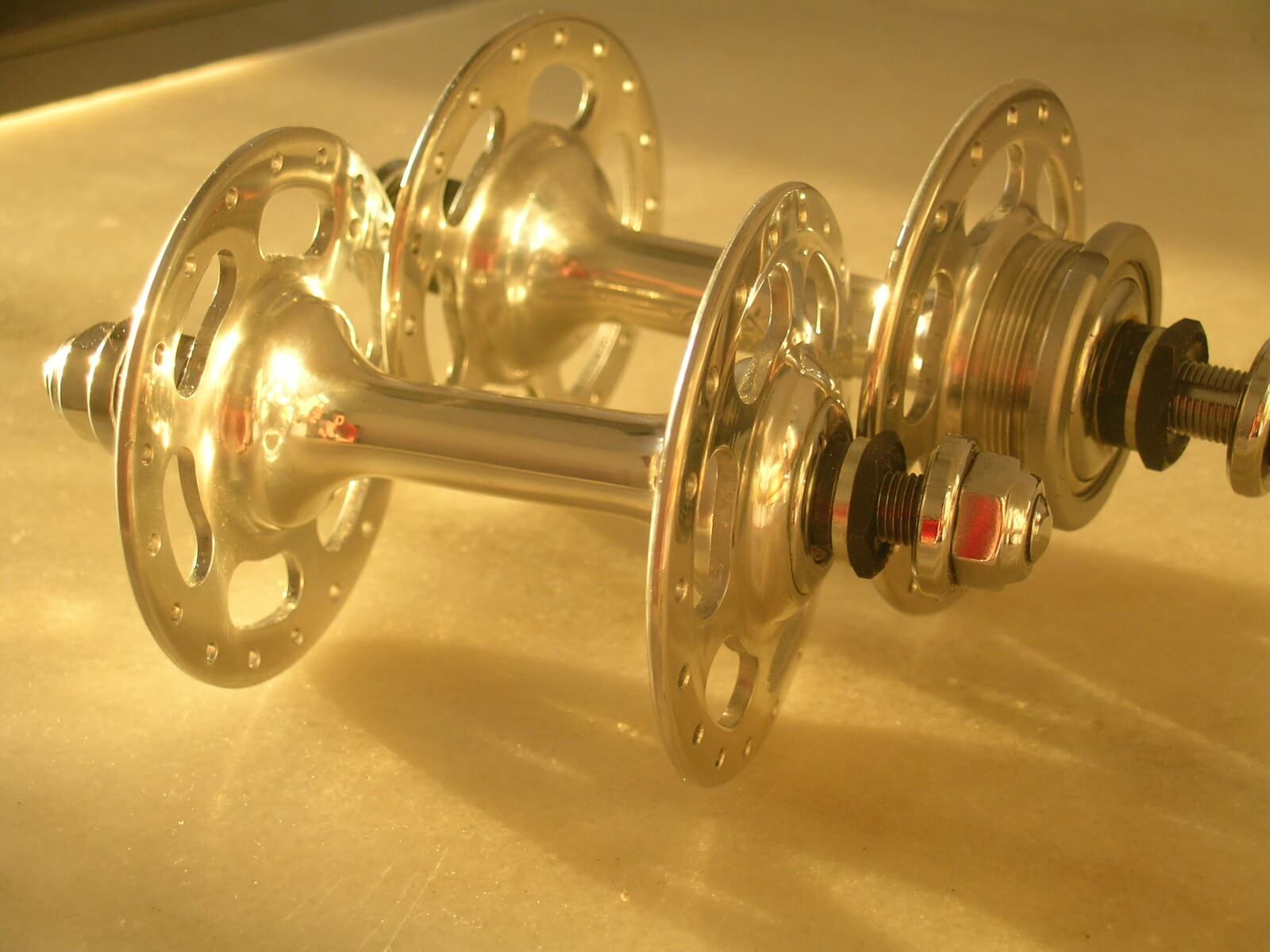
What I want to build is a hub. With WordPress. A hub is the central meeting point of the spokes that provide the support for a bicycle wheel. Of course, I choose to use the bicycle analogy. There are other examples of hubs like train stations, or airports, and even network hubs. Nope. Bicycles.
The hub in this case is a domain – andyrush.net. The spokes will be subdomains. The domain and subdomains will form the wheel – for going forward, hopefully 🙂
The subdomains will be a photos site, a video site, and a microblogging site. Those sites now exist, and like I said previously, a website is never finished.
Here they are:
Those sites join the existing websites andheblogs.andyrush.net and microblog.andyrush.net.
Warning. It’s early days with the first three. Take a look if you dare.
Oh yeah…
… the Fediverse. I totally forgot 😉
All of those sites will be on the Fediverse in one form or another, thanks to the WordPress ActivityPub plugin (and a few others I’ll talk about soon). Like using the Full Site Editor instead of Elementor, why use Mastodon, Pixelfed, or PeerTube when I can just use WordPress.
With these WordPress sites I have essentially built some shelves and storage cabinets. I’m still figuring out the storage cabinets as they will be filled by photos (relatively low bandwidth), and videos (relatively high). What will also be stored on these shelves are my “social media” posts. I use the quotes because I think social media is an evolving term, and it may not ever mean the same thing to everyone.
You may be asking the question, “Andy, so what about Mastodon, Pixelfed, and PeerTube?” That’s a very good question – an answer that people often give when there isn’t a clear or immediate answer. In future posts, I will explain THE PLAN.
Many of my experiments have come with frustrations (the technology just not being there), or realizations (ooh, video storage could be expensive). I’ll explain where I am with that as well. I think it will be some fun stuff to talk about. If the plan works out, maybe it can be somewhat of a blueprint for reclaiming your digital identity, if I may be so bold, sir.
That’s all for now. I REALLY needed to get this post out of my system because I was about to burst. There’s more to come.
… and if you have read this ’til the end, I love you!


Leave a Reply