YouTube Time

In this 2nd post about WordPress embeds (here’s the 1st one), I wanted to point out a simple trick that is part of the API for the YouTube embeds. You may not notice anything special about the YouTube video included above, but if you click the play button you will notice that it does not start from the beginning, but at the 15:10 mark of the video instead.

This is accomplished by adding a small piece of extra “code” to the end of the YouTube link. Again, in the instance above we wanted start this 15 minutes and 10 seconds into the video, so we add the following to the standard YouTube link:

&t=15m10s

Show the whole link looks like this:

http://www.youtube.com/watch?v=iG9CE55wbtY&t=15m10s

Again pretty easy. Wes Fryer also pointed me to a site that generates the extra time code for you. It’s available at youtubetime.com. Sure you can type in the code yourself, but laziness is the mother of invention.

Now what if you want to END a YouTube video at a specific time? A little bit of research didn’t lead to any answers using the oEmbed API, but it may be possible that I missed it. What you can use it a site called TubeChop. It will generate code you embed into your posts. Just enter in your YouTube video link and then on the resulting page choose the start and end points for the video. Finally, click the “chop it” button and you’ll see both a link and the embed code for the video. It would look something like this:

The downside to TubeChop appears to be that it generates only a Flash version of the outputted video so it’s a no-go on an iOS device.

So remember when it comes to your WordPress YouTube video embeds, it all in the timing.

This is part 2 of the series of posts on WordPress embeds. Here’s Part 1.

Posted in Audio & Video, WordPress, YouTube | 1 Comment

Oh, Embed

embedded mechanic

We are thick in the middle of WordPress here in DTLT, constantly creating new sites for ourselves, and wouldn’t you know, now helping great gobs of faculty with their domains and WordPress installs. We are daily discovering new ways to twist WordPress into our heart’s desire of a publishing platform.

What I have long concentrated on in regards to digital publishing has been various types of media (you know, as the New Media Specialist). We get at including video and images in WordPress posts with “embeds” which is the process of inserting code into the editor along with the text. YouTube, Vimeo, and other sites include “embed code” to copy and paste into web documents to allow for easy media publishing.

In DTLT’s long history of working with WordPress, we have seen all manner of plugins that have come and gone, to give us the media publishing capabilities. We’ve also used the embed codes from services that have come and gone. What can happen over time is that remnants of posts are left that used long forgotten plugin “short codes” and embed code that no longer works. What I have been recommending of late is that people use the built in feature of WordPress for embeds. It’s a technology known as oEmbed. As the WordPress site states, it makes embedding media content “super easy”. It also future-proofs the media that you embed. Plugins and code can go, but what remains is the link to the media, so as long as that media exists on the hosting sites, you always follow the URL to the media.

How can take advantage of the easy embed? Well, it really is easy. Just simply go to the page for the media that you want to embed in a WordPress post and just copy and paste the link into your editor window. Just be sure you are in the text editor as some of the oEmbeds don’t work in the visual editor. For example if I want to embed a Vimeo video, I would paste in the link to the corresponding video page. An example would look like:

https://vimeo.com/44526439

What would show would be:

I’ve got an example page for other supported media sites, which include Vimeo, YouTube, Flickr, Slideshare, and even Twitter. It simply shows how the embedded media looks in the blog post or page. It’s dead simple.

This is part 1 in a series on WordPress embeds.

Posted in WordPress | 7 Comments

Got Running?

Running

I have an admission to make. I have a bit of a crush on someone. My wife kind of knows about it, but doesn’t know the full extent of it. She (my crush) has a lilting British accent and she talks to me in the most calm and soothing way. Here’s what she sounds like:

For the last 9 weeks I’ve been on a running program called Get Running. I ran back in high school until I discovered cycling. I have run at various times to “get exercise” – on the beach on vacation, when I got sick of cycling. I usually ran (excuse the pun) right back to cycling because I hated running. Not unlike someone else I know. Between 8th and 9th grade I ran 500K over the summer. Between 9th grade and 10th grade I ran 1000K. I was a pretty serious runner as a 15 year-old. Cycling took me over at 16 and the running slowly faded. Years passed, I became at times a hard-core cyclist. I did some races when I first moved to Fredericksburg. Running was always about doing something different, but it never stuck.

Until I met, HER. She encouraged me for 9 weeks. She even let me listen to music while she occasionally broke in to tell me of my progress. She would say things like “Fantastic!” and Brilliant!” when I would finish the run. I got addicted to that as much as the running itself. The music part was great too. I could listen to my own music, Spotify, and in the end Pandora (XTC Radio, FTW!). I never listened to music when I ran back in high school. Those unfamiliar with the technology at the time, we had these things called “Walkmans”. A “portable” tape player that seemed to weigh as much as a bowling ball. There was also no such thing as “ear buds”. What we have today in the form unlimited music choices on a light, truly portable device is amazing. So it all came together with this program. And now I’m done.

I’m kind of sad now though. The relationship ended so abruptly. I got the final message that you see above, but no spoken words like “I’ve really enjoyed running with you”. There was a hopeful mention of a “next time”, but there is not any sign of where I go next to find that. It’s almost like she isn’t real.

Anyway, the program is pretty good. In all seriousness, I would change one thing about the program itself. The progression is pretty good, but you get to a point (I suspect others would to) where you need to “plateau”. That is where you reach a certain distance/timed run and you stay there for a while before you go to longer distances/times. So when you get to 15 minutes continuous runs, they should hold it there for a couple weeks, and even introduce some shorter runs again. Then increase the length of runs again. Maybe they think people will get frustrated with it needing to take more than 9 weeks to get to 30 minute runs, but I think it could be too much for some. There were days when I had all I could do to finish. A couple of times I was so tired I would easily trip over roots on the ground and fall on my – well you know. Now I feel good and will look at other programs or maybe configure my own. I am aching for cycling now, but the wintery weather we are having lately isn’t conducive. I don’t want to ride indoors. So we’ll see how things move forward. I may continue running while I begin my cycling again. The best part of this is I still go into the cycling season with good fitness. Not good cycling fitness per se, but at least less weight to haul up the hills when I do get back on the wheels. Exercise is such a wondrous drug. But I’ll miss that voice.

Posted in cycling, Technology | 2 Comments

On Film Criticism

little boy thumbs up

When I was a student at SUNY Cortland, I took a class called Film Criticism. It was taught by an instructor whose name I have forgotten at the moment, but he was employed as a film critic by an Oregon newspaper at one point. His charge to us from the beginning of the course was to write film reviews that were equal in quality to those found in the New York Times. A lofty challenge indeed. This was in the heyday of Janet Maslin and Vincent Canby. We were also exposed to Pauline Kael who could work herself into an almost orgasmic state over a good movie.

My go-to guys (film critics) previous to this class were Siskel and Ebert, whose show “At the Movies” on PBS was a staple for me and my brother. Like all “popular” film critics, they had a signature appeal, a gimmick. Thumbs up or thumbs down. Like them or hate them, they taught me about film. What to look for and how to “see” a film. Sounds obvious, but really seeing a film takes effort and knowing what you’re looking for. Gene Shalit had his mustache, Rex Reed had…whatever he had, and Siskel and Ebert had their thumbs. It wasn’t all they had or the show would have lasted less than a minute to “review” a few films.

Anghus Houvouras theorizes that Siskel and Ebert killed film criticism with those selfsame thumbs. They made film criticism into an exercise of consuming fast food, says Houvouras. This criticism certainly looks to have generated conversation, though not of the kind that he would approve. He is also not a fan apparently of Twitter.

Twitter has continued this trend: the reduction of complex thought into 140 characters.  Film criticism continues to die one tweet at a time.  Twitter is where discourse goes to die.  And anyone claiming they’ve had quality discussions on Twitter probably aren’t the best conversationalists.

Well, that’s that then (or is it, the conversation continues on Twitter).

Look, what Siskel and Ebert did was have a conversation about films. A thumb up or down was a recommendation, but with a conversation behind it. The show left you with lots of reasons why or why not, but it left you with the answer to the question “do you recommend this movie?” Now what movie studios did with those recommendations is another story. Movie posters would often feature either or both Siskel’s and Eberts’ Thumbs up review. There is obviously something behind this or the thumbs would have no meaning to millions of people.

Critics were giving stars to movies long before thumbs. Roger Ebert addresses the ratings system by answering the critic who says he “gives out too many stars“. Ebert has called the thumbs system “wacky“, but in the end says it answers the basic question. That’s the point. A period at the end of the sentence. Yes or No. Go see this movie or don’t. The review has more information if you want. It’s up to the reader. Of course a thumb rating has shallowness to it, but so does an Oscar if you reduce it to the Binary Theory. To paraphrase President Obama, they didn’t build that, you did.

So in the end, I’m kind of in the middle. Anghus doesn’t get everything wrong – his headline did ELICIT a reaction – but his criticism isn’t so right either.

There.

P.S. I still disagree with Ebert’s “thumbs up” on The Gods Must Be Crazy.

Flickr photo by Michele Truex.

Posted in Film | 1 Comment

Andy Rush TV

Andy Rush TV

Stuff we said in the past sometimes comes back to haunt us. However, sometimes we are reminded of things we’ve said that sounded like good ideas at the time. We research if it’s possible and then find what we need or move on. Because of some of our recent work on the media server, I have gotten a chance to review some of the TV shows we did more than a year ago now. On December 14, 2011, Tim Owens and I were doing our 101st DTLT Today episode. It was a show about the Opening of the Venice 2011 Art History Exhibit. Tim and I had recorded the students giving their presentations. We also streamed it live for anyone who cared to watch at that given moment. At about the 5:10 mark in the video Tim talks about publicizing this idea to more professors and encourage them to not keep student presentations “behind closed doors”.

That subsequently triggered an idea in my head (at about the 5:40 mark), “what if there were a channel” where fellow students, students’ friends at other campuses, or parents could watch these types of presentations on a continuous loop or on a specific schedule somewhere. You know like a TV station.

After the show I began the search for sites or services that offered such a concept. YouTube and Vimeo offered the idea of “channels” to its users. However, it wasn’t more than a “playlist” of videos played in sequence. You go to a YouTube channel and it starts with the same video every time. Vimeo has something similar now called “couch mode” that allows you to watch a channel as a playlist. Neither service has an option that allows you to play a video at 8:00pm on Saturday night. I had hopes back then that something called WorldTV might do what I wanted, and it did incorporate live streaming into the mix, but again nothing really on a schedule. So there wasn’t much to move ahead with, so I moved on.

Fast forward to January 23, 2013 and after re-watching that video I decide to renew the research. What I stumbled upon turned out not to be as earth shattering as I hoped, but cool enough to say it has a lot going for it. So my proof of concept is to build something that I am initially calling Andy Rush TV. The idea is to run videos from various sources, but primarily YouTube and Vimeo. Occasionally, I will want to play a video at a precise time (like 8 o’clock on a Saturday). I will also want to stream a live show to this channel. Well, I’m currently experimenting with something called StationCreator.

StationCreator

StationCreator is a service that allows you to have a schedule, but also something called “autopilot” so you can have a “station” running 24/7. There are 3 pricing plans. A free account gives you one channel and you can only use autopilot. The “Pro” account, for $200 a month, gives you unlimited channels, as well as scheduling and even analytics. There is an “Enterprise” account (at $1,000 a month) that adds real-time tracking, video hosting and API access.

For this proof of concept, I created a new WordPress site at tv.andyrush.net. StationCreator gives you the embed code to place on your site and that provides the window to your station. Whatever gets scheduled will play in that window. Autopilot videos are played when there is nothing scheduled. Scheduled shows start right when they should. I’m early on in this experimentation so I haven’t incorporated live content yet.

I’ve had some wonky behavior when I insert scheduled videos into the list. Eventually things will stabilize as long as you don’t make a live change and then scheduled shows play nicely between autopilot shows. It seems to be in a beta state right now. Definitely functional, but with a few bugs. I am working to find the way to play the channel on my mobile device. Their site says “We give each station a mobile-ready fullscreen player page on our site, too.” I’m still looking for it.

As I say, it is early on in the game, but it looks like even the “free” channel would work pretty well. When it’s working properly, you do get the “joined in progress” feeling of a real TV station. You also get widget code that can go into WordPress sidebars for what’s playing currently and what’s coming up in the schedule. Autopilot will still give you a schedule of upcoming shows. LOTS of potential here and I hope to put it to a good test. So go enjoy Andy Rush TV now!

Posted in Audio & Video, New Media | Tagged | 3 Comments

The Up Series

“Give me a child until he is seven and I will give you the man” – attributed to Francis Xavier, the co-founder of the Jesuit Order

I’m thinking a lot about documentaries lately. I’ve got no less than two classes working on them this semester. I took great pleasure in producing (a short) one last semester for an EDUCAUSE focus session that featured my colleagues at UMW, along with other faculty, staff, and students. I’m also working on a resource to help students create them, so in turn I’m thinking about some of the greatest documentaries ever made.

The above quote, supposedly from Francis Xavier of Jesuit fame, is the framing of what is collectively known as the Up Series. Michael Apted was a researcher on the first film of the series, Seven Up, which began to tell the story of a group of children all at the age of 7 years old. The series begins by asking the children some different questions about their lives, their dreams, the opposite sex, and race among other things. Every seven years after that, Apted has revisited (and directed) the subjects, first with the follow-up film 7 Plus Seven. Then with 21 Up, 28 Up and so on all the way to 2012′s 56 Up.

Not only is the Up Series a documentary, but the seminal “longitudinal” documentary, and therefore belongs on any list when thinking “best of”. What fascinates me most about this documentary is that the storyteller bias is in a strange way magnified as it spans it’s almost 50 years. The idea that questions that are asked of these children, and how they answer the questions in subsequent years, constitute “their lives” reveals itself to be quite tricky. In the first film one of the 7 year-olds maps out all of the schools that he will attend in future years, from prep-school to university. In one of the follow up films, when he has finally achieved what was previously stated (save substituting Oxford for Cambridge), he complains that he did indeed achieve it. What wasn’t shown was all of the hard work, and anguish, and sleepless nights. For as long a time as this documentary spans, the parts of the story that get left out are equally massive.

Recently, WNYC’s On The Media program revisited the series and spoke with Mr. Apted. It turns out he didn’t know that the previously mentioned 7 year-old, named John, had lost his father and wound up getting a scholarship to Oxford because of financial difficulties. John complains that the director made it out to be a “indestructible birth-right”, when it turned out to be a struggle. Apted still argues that there was a strong “guiding hand” and an “empowered” background. John’s father died when he was eight or nine. So the question remains was the “man” made at seven?

The films are generally about class and how life paths go in such unpredictable directions. There is a strong focus on education and choices made, or not made, that determines those directions. It is also about politics and religion and race as some of the subjects discuss how those parts of society fit into and affected their lives. I haven’t seen 56 Up yet, but supposedly because of the political situation in England with the financial downturn and subsequent austerity programs, the now 56 year-olds are quite politically vocal. I can’t wait to see it.

Ultimately we have to decide if we see enough of the man, or woman, in the 7 year-old to prove the Jesuit thesis. However, the journey is equally fascinating and we see many different people all in the same body as they grow to adulthood. And even how they change in adulthood. One of the participants, Neil, complains that even though he has received hundreds of letters where people proclaim to know exactly how he feels, they still don’t REALLY know. We are a product of our life and we are all unique no matter how much we still try to classify ourselves and others.

By the way, the whole series, except for 56 Up is available on Netflix streaming. I strongly encourage you to see it.

Posted in Film | Tagged , | Leave a comment

Let ‘er Auto Rip

Amazon Cloud Player

I’m still working out the implications of an announcement that came across my virtual transom this morning, but Amazon announced today that they are implementing a service called AutoRip for certain audio CD purchases. The basic idea is, buy an audio CD (at Amazon obviously) and instantly get it “ripped” to your Amazon Cloud account so that it is available in your Amazon Cloud Player. These songs are then available to play from the web on the Cloud Player page, or on your iPhone or Android device with the appropriate apps.

What fascinates me about this service is the idea that we are, again, seeing this transition from old to new (or in this case old to not quite as old – CD 1983, MP3 1994) technologies. And the birth of new services. This is also intended to be competition for Apple’s iTunes Match service. However, with the Amazon service, it’s an interesting twist. Buy your music online and get a free archival copy (the CD) of your music sent to your home for free.

I’ve always favored the idea of purchasing a CD and then ripping it to iTunes (or Windows Media Player or whatever) so that you have that pristine audio from the CD as a backup. I do it less and less though. Audiophiles will still keep their audio CD players, and of course their turntables for their vinyl LP albums, but I’m wondering who will value the CD in the coming years. I could honestly see people never unwrapping the plastic from the disc. How much longer will there be CD players? Will it eventually make a resurgence like the turntable? Is there any extra cost to the consumer? Obviously there is the production cost of the CD of however many cents each disc is worth. The ultimate question I guess is what’s the point of a CD, at least for most people?

I never bring CDs into my car anymore. I don’t have a CD player hooked up to my home theater/sound system. I do have a DVD player, which will play CDs, but I never use it that way. I am VERY intrigued with the idea of albums released to include 5.1 sound (remember Quadrophonic sound? It’s old) to get the true spacial separation of the music, but this requires a more complex setup than most people are willing to incur. This is the equivalent of DVD versus Blu-ray debate. For most, the DVD is just fine.

The coolest part of this service being introduced is that all of the CD purchases that I made over the past several years has translated into more music being imported into MY Cloud Player account. Some of my musical taste is on display in the above screenshot. However, not all of the CDs that Amazon sells have the AutoRip designation next to them. Will Amazon be doing this for every CD eventually? We’ll have to wait and see as there is no FAQ yet for this service. You can see the thoughts and questions that this announcement has generated in my mind. Obviously the answers are not even close to being clear. So many people may react to this with a simple “huh”. I’m sort of one of them.

Posted in Music | Leave a comment

Hey Bulldog

Have I ever mentioned that my favorite Beatles song is the one above – Hey Bulldog? I was prompted to remind everyone of this because of a ping I received on Facebook, of all places, from a high school classmate. The video that the Beatles performed for the song is up on YouTube. It is one of my earliest musical remembrances as I was 4 years old when it was released. It appears in the movie Yellow Submarine as well (so that film needs to move up in my queue now).

So picking a favorite Beatles song is a lot like picking a favorite Kubrick film. They are all good, but it depends on lots of intangibles when picking a favorite. It’s complicated and it doesn’t necessarily have to be the critically agreed “best” of a given artist’s work. Everyone knows my favorite Kubrick film right?

Posted in Music | 1 Comment

How I Survived Christmas 2012

Scrooge

Messin’ with Cratchit

As I mentioned in a previous post, Christmas can be a difficult time to get through. I decided on a multi-pronged approach to survive my 2012 Christmas season. The first tactic was to not travel. This was not originally part of the holiday plan, but as it turned out it was crucial. The second was a fairly standard tactic. Watch some good movies (and if I could, get my 10 year-old son to watch with me). The third tactic was to make sure I exercised. Normally that means cycling, but this year I turned back to running. It is still unclear to me why I did, but it has been a change of pace that has hit the right chord.

The holiday break began with a real treat. A revisitation of the Beatles Magical Mystery Tour. Originally shown on Boxing Day, 1967 in Great Britain, the PBS “Great Performances” presentation included interviews with some of the principal figures involved in the film. Including Paul and Ringo. It was followed by a re-airing of the film. My son was fascinated by it. The break ended with watching Monty Python and the Holy Grail. My son still talks about scenes from this movie.

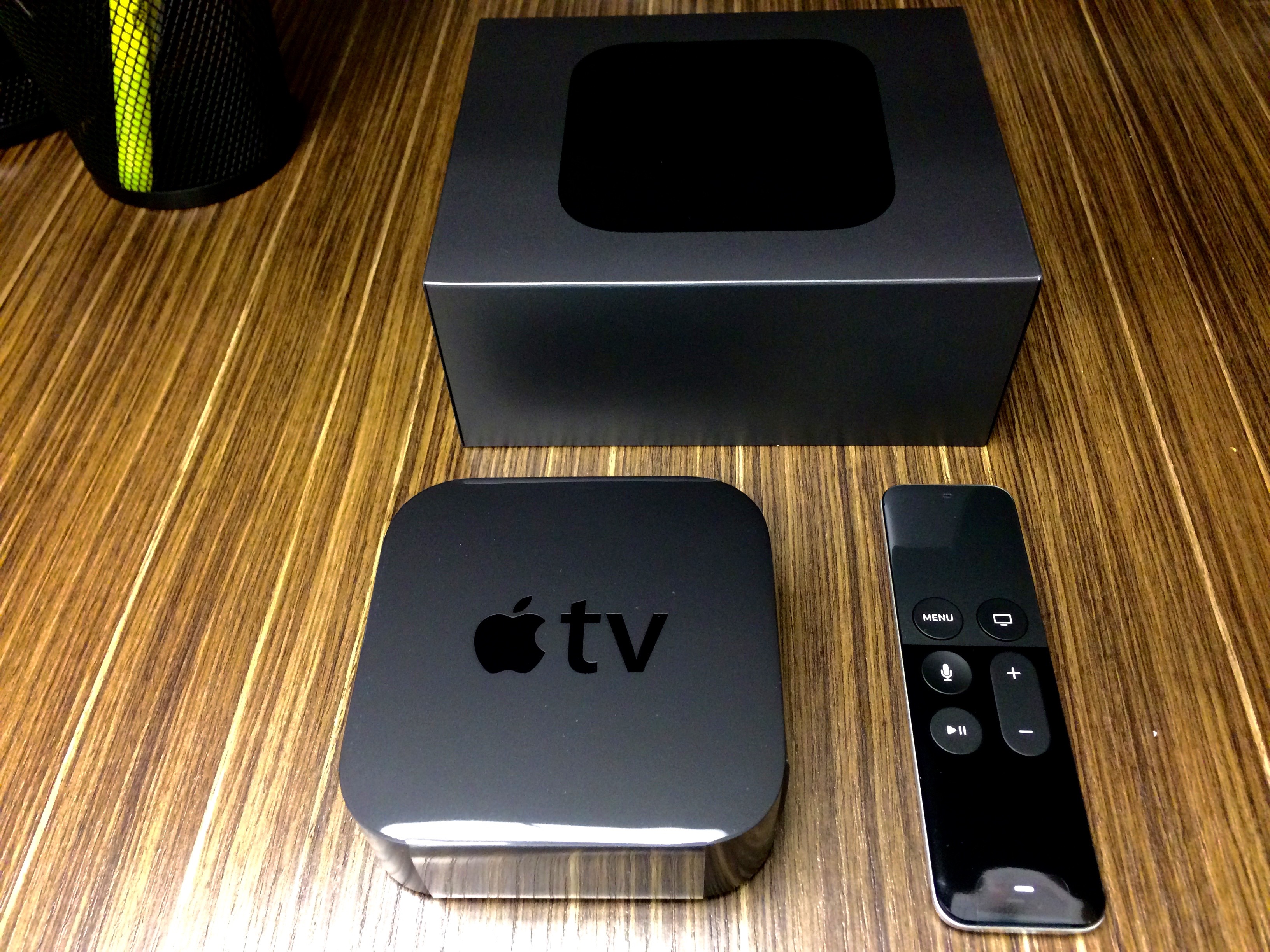
Christmas Eve I had the idea of watching A Christmas Story. My son, however, is kind of at that stage where everything needs to be novel, and the idea of watching this movie again was not at the top of his list. We stepped through some of the movies that I had available on my Apple TV and towards the end was Scrooge. Also known as A Christmas Carol. And not just any version either, but the 1951 film starring Alastair Sim as Ebenezer. A few times during the movie I looked at Aidan and his face was contorted trying to figure out what the Dickensian dialogue was saying in modern English, but he got the gist of it. Wait ’til he groks the idea of this story being an indictment on 19th century capitalism, then, like his father, he’ll really enjoy it.

Of course, eventually, there is the scene of Scrooge’s (literal) awakening. I’m hoping that it is having the same effect on my family, but it is (as it always is) an overwhelming rush and tingling of joy. Scene after scene after Scrooge (Sim) awakes from his nightmare is pure indescribable joy. Eye-watering, head-shaking, manic-ridden joy! What makes Mr. Sim’s performance that much more complete are his interjected facial expressions of contrition between his fits of giddiness. He knows he has been a fool, and an ogre, and himself – a humbug. I would argue it is one of the most profound and moving performances of human metamorphosis in cinema. It is that reminder that we are a product of our past, and how we live and act in our present, will determine the type of future we will have.

So it may sound trite, but a film at least helped me to navigate Chrsitmas 2012. I’m already looking forward to a more joyous 2013. Happy New Year!

Posted in Film | 2 Comments

A Mac-like Video Converter for Windows

Many moons ago I blogged about a video converter called Evom. I loved it (still do) for its simplicity and for its unique features. I’ve found something similar for the PC. It’s been available for a while, but a new version (3.0) has just been released that gets close to Evom for the PC. It’s called Miro Video Converter and to use it you simply drag your video file into the window, select what device you want to convert for, and then click the convert button at the bottom of the window. There are tons of choices to convert files to. All of the latest Apple devices are listed, as well as Android devices and even the Kindle Fire. It also allows the conversion to “open” format file types such as Ogg Theora (video) and Ogg Vorbis (audio). There’s even the choice of WebM for those of you still holding out hope for that format to catch on. Though my advice to you would be to exhale.

Now my favorite feature from Evom was that you are able to drag a YouTube URL from a web browser window into Evom and it would begin downloading and convert your video. That feature works much less consistently now, if at all. So I still use Firefox and the Video Download Helper plugin to download YouTube videos. Once they are on my machine I can then use Evom to convert them to an audio MP3 file. I’m happy to report that the MP3 conversion feature works in Miro Video Converter too, though quite a bit slower than Evom. But hey, these are free programs we’re talking about.

So Miro is also available for the Mac, but I prefer Evom, for most of what I do. Mostly because it is faster. However there is one other intriguing feature that Miro has. It can convert into what are known as “ingestion” formats, such as ProRes (what Final Cut Pro X likes), AVC Intra, and DNxHD. What this means in theory is that you could convert videos into formats that are recognized natively in video editing software. How this would work in practice remains to be seen. But it’s interesting to see those options.

I have several students every semester ask how they can get the audio from a YouTube clip into their projects, and now I have a program that I can recommend for PC users.

Posted in Audio & Video, umwnewmedia, YouTube | Leave a comment